
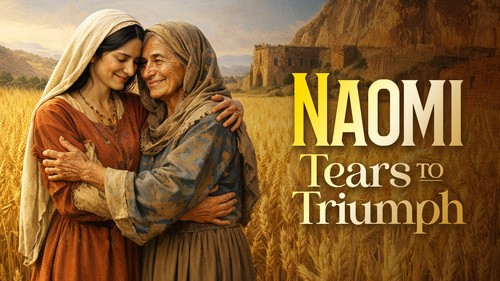
(This is a fictional interpretation of the biblical account.)
Impoverished. Widowed. Sonless. A decade-long legacy of loss, sorrow and tragedy.
“Oh Lord, You have laid a burden on me that is too much for me to bear. Please withdraw Your hand of judgment from me.”
It was more of an embittered accusation than a plea for mercy. But now was not the time to rail against God; Naomi had a crucial decision to make. As she paced alongside the main road that led out of the heathen nation of Moab, Naomi rehearsed her words. Two women and three mules were awaiting her decision. Satisfied she had found the right words, she returned to her companions. “Ruth, Orpah, please come here.”
The two young women obeyed. Naomi inhaled deeply and gathered herself.
“As you know, my dear daughters, it was ten years ago that a terrible famine struck my
hometown of Bethlehem in Israel, bringing us here.” The women already knew the story. “I
opposed the move. I told my husband that we were God’s people and that we belonged in the land He had given us. But Elimelech was a stubborn man. He said, ‘Naomi, if we are God’s people, then why has He turned His back on us.’”
The younger women nodded respectfully.
“Elimelech,” Naomi continued, “was convinced that God had abandoned us, so, when he heard that food was bountiful here in Moab, he moved us here.” Her eyes began to well up. “And we know how that decision turned out. Elimelech – may his soul rest in peace – died a few years later, and then my two sons married each of you, even though our law forbids marriage of Israelites to Moabites.”
Naomi noticed her daughters-in-law hurt expressions and quickly sought to mend them. “I mean no offense,” she said. “You two have been blessings beyond measure to me. And now, with the deaths of Mahlon and Kilion to the plague, I am left bereft of husband and sons, as you are of spouses. And what is worse, all three of us are impoverished. We have nothing.”
“It seems,” Orpah ventured, “that our grief unites us.”
“It does, my dear,” Naomi concurred, “but to what end?”
“What do you mean?” Ruth asked suspiciously.
“It means, my daughters, that I must insist that you turn back and return to your homes.”
Naomi’s bluntness stunned the younger women. “Do not be alarmed at my words,” Naomi
continued. “What have I to give you if you continue this trip home to Bethlehem with me? I have nothing but our property, and that cannot sustain you. The Lord has stretched out His arm to afflict me, and me only. I have nothing to offer you by way of security. You are both young. Please, return to your fathers’ homes and begin life anew.”
The two women began to weep. “How can we abandon you at such at time?” Orpah asked.
Naomi assured her. “You are not abandoning me, dear. That you have come this far with me is a wonderful act of kindness. Please, turn back and go home.”
Orpah looked at Ruth, who quickly dropped her gaze to the ground. Finding no support there, she turned back to Naomi. “Please, my daughter, I absolutely insist.”
Orpah released an anguished wail and embraced Naomi. “Could you ever forgive me if I desert you?”
“There would be nothing to forgive, my dear. And besides, I would consider it wisdom, not
desertion.”
Orpah had run out of objections. After another show of grief and making her final farewells, she took hold of her mule that carried her possessions and headed back to her father’s home.
Naomi turned to Ruth. “You must do the same, dearest.”
“No, Mother, I cannot.”
Impoverished. Widowed. Sonless. A decade-long legacy of loss, sorrow and tragedy.
“Oh Lord, You have laid a burden on me that is too much for me to bear. Please withdraw Your hand of judgment from me.”
It was more of an embittered accusation than a plea for mercy. But now was not the time to rail against God; Naomi had a crucial decision to make. As she paced alongside the main road that led out of the heathen nation of Moab, Naomi rehearsed her words. Two women and three mules were awaiting her decision. Satisfied she had found the right words, she returned to her companions. “Ruth, Orpah, please come here.”
The two young women obeyed. Naomi inhaled deeply and gathered herself.
“As you know, my dear daughters, it was ten years ago that a terrible famine struck my
hometown of Bethlehem in Israel, bringing us here.” The women already knew the story. “I
opposed the move. I told my husband that we were God’s people and that we belonged in the land He had given us. But Elimelech was a stubborn man. He said, ‘Naomi, if we are God’s people, then why has He turned His back on us.’”
The younger women nodded respectfully.
“Elimelech,” Naomi continued, “was convinced that God had abandoned us, so, when he heard that food was bountiful here in Moab, he moved us here.” Her eyes began to well up. “And we know how that decision turned out. Elimelech – may his soul rest in peace – died a few years later, and then my two sons married each of you, even though our law forbids marriage of Israelites to Moabites.”
Naomi noticed her daughters-in-law hurt expressions and quickly sought to mend them. “I mean no offense,” she said. “You two have been blessings beyond measure to me. And now, with the deaths of Mahlon and Kilion to the plague, I am left bereft of husband and sons, as you are of spouses. And what is worse, all three of us are impoverished. We have nothing.”
“It seems,” Orpah ventured, “that our grief unites us.”
“It does, my dear,” Naomi concurred, “but to what end?”
“What do you mean?” Ruth asked suspiciously.
“It means, my daughters, that I must insist that you turn back and return to your homes.”
Naomi’s bluntness stunned the younger women. “Do not be alarmed at my words,” Naomi
continued. “What have I to give you if you continue this trip home to Bethlehem with me? I have nothing but our property, and that cannot sustain you. The Lord has stretched out His arm to afflict me, and me only. I have nothing to offer you by way of security. You are both young. Please, return to your fathers’ homes and begin life anew.”
The two women began to weep. “How can we abandon you at such at time?” Orpah asked.
Naomi assured her. “You are not abandoning me, dear. That you have come this far with me is a wonderful act of kindness. Please, turn back and go home.”
Orpah looked at Ruth, who quickly dropped her gaze to the ground. Finding no support there, she turned back to Naomi. “Please, my daughter, I absolutely insist.”
Orpah released an anguished wail and embraced Naomi. “Could you ever forgive me if I desert you?”
“There would be nothing to forgive, my dear. And besides, I would consider it wisdom, not
desertion.”
Orpah had run out of objections. After another show of grief and making her final farewells, she took hold of her mule that carried her possessions and headed back to her father’s home.
Naomi turned to Ruth. “You must do the same, dearest.”
“No, Mother, I cannot.”
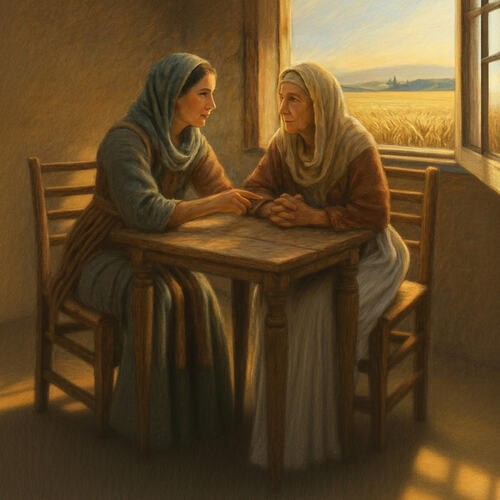
“But Ruth, the Lord’s hand of affliction is heavy upon me. I have nothing for you …”
“No, Mother,” Ruth countered, her tone firm, her words insistent. “Do not urge me to leave you or to turn back from you. Where you go I will go, and where you stay I will stay. Your people will be my people and your God my God. Where you die I will die, and there I will be buried. May the Lord deal with me, be it ever so severely, if anything but death separates you and me.”
Naomi wanted to argue, but could not. Ruth’s bold proclamation had staggered her and rendered her dumbfounded. “Very well, then,” she stuttered, “let us go to Bethlehem.”
A few days later upon their arrival, they were greeted by a town shocked at Naomi’s return. They had heard of all that had befallen her, and had no idea how to comfort her. “Welcome home, Naomi,” the women said softly.
Naomi stopped and looked at them. “My friends, please do not call me Naomi any longer. The name ‘Pleasant’ no longer applies to me. Instead, call me Mara, for the Almighty Himself has made my life bitter. He has afflicted me and brought misfortune upon me.”
After a week, Naomi’s wretchedness knew no bounds. She still felt the relentless pangs of her tragic fate and the dreary emptiness of her husbandless and sonless house. Ruth, on the other hand, knew there were dire needs that must be met – nourishment being one of them.
“We are running out of food, Mother,” she said. “Let me go to the fields and pick up the leftover grain behind anyone in whose eyes I find favor.”
Naomi had no choice but to consent as Ruth set out for the nearby fields.
Alone in the house for the first time since her return, Naomi’s misery was never more acute. She felt the horrible loneliness of her existence, the terrible bitterness of her soul. “Oh Lord,” she cried falling to her knees, “why have You afflicted me so? Why have You forsaken me as You have?”
She wallowed in her misery all day until suddenly Ruth came rushing through the door. “Mother, please, come outside and see.”
Naomi was baffled. Following Ruth, she found on the ground before her house a week’s supply of barley. “Where did you get this?” she asked stunned as she gazed over the bountiful haul.
“I harvested in the field of a man named Boaz. He showed remarkable kindness and mercy to me.”
Naomi considered the name. “Yes, I know Boaz,” she said, detecting an unexpected twinge of hope. “He is a very close relative of ours and a wonderful man. Yes, Ruth, glean only in his fields. He will look after you.”
Over the next few months, Boaz continued to do exactly what Naomi said he would do, and the two women had no lack of provision. But Naomi was not satisfied. One morning before Ruth left for the field, Naomi stopped her. “I must speak with you, my dear.”
“Yes, Mother.”
“I can no longer sleep. My mind is consumed with thoughts of you.”
“Then please, speak what you must.”
“My daughter, should I not try to find a home for you, where you will be well provided for?”
Ruth listened quietly. “I want you to do something,” Naomi continued. “Tonight Boaz will be
winnowing barley on the threshing floor. I want you to wash and perfume yourself, and put on your best clothes. Go down to the threshing floor, and when he lies down, go and uncover his feet and lie down. He will tell you what to do.”
“You want me to offer myself to him in marriage?”
“Yes, my love. I know he is quite a bit older than you, but he will provide for you for the rest of your life. You will be a woman of means and security. Will you do this, my dear?”
“I will do whatever you say, Mother.”
Naomi watched as Ruth left for the fields. When she was out of sight, Naomi kneeled. “Lord,” she said softly, “I am tired of fighting with You and inflicting my hostility upon You. If You would but make this marriage a reality, then I will die contently. Oh Lord, I know I do not
deserve Your mercy, but if You do this one thing, You will have my gratitude for eternity.”
---
One year later, Naomi sat as the guest of honor of the women of Bethlehem. On her lap was her two-day old grandson Obed.
“Praise be to the Lord, who has given you a son!” the women rejoiced. “He will renew your life and sustain you in your old age. For your daughter-in-law, who loves you and who is better to you than seven sons, has given him birth.”
Ruth came up behind Naomi and embraced her. Naomi wanted to return the loving gesture, but her hands were already filled. Then, suddenly, all seemed to go silent. In that moment of inexpressible joy, Naomi felt the presence of God as never before.
Dearest Lord, she gloried in the inner recesses of her soul, you have turned my misery into joy; my tragedy into triumph. My heart is yours. My soul is yours. I am yours. Always.
“No, Mother,” Ruth countered, her tone firm, her words insistent. “Do not urge me to leave you or to turn back from you. Where you go I will go, and where you stay I will stay. Your people will be my people and your God my God. Where you die I will die, and there I will be buried. May the Lord deal with me, be it ever so severely, if anything but death separates you and me.”
Naomi wanted to argue, but could not. Ruth’s bold proclamation had staggered her and rendered her dumbfounded. “Very well, then,” she stuttered, “let us go to Bethlehem.”
A few days later upon their arrival, they were greeted by a town shocked at Naomi’s return. They had heard of all that had befallen her, and had no idea how to comfort her. “Welcome home, Naomi,” the women said softly.
Naomi stopped and looked at them. “My friends, please do not call me Naomi any longer. The name ‘Pleasant’ no longer applies to me. Instead, call me Mara, for the Almighty Himself has made my life bitter. He has afflicted me and brought misfortune upon me.”
After a week, Naomi’s wretchedness knew no bounds. She still felt the relentless pangs of her tragic fate and the dreary emptiness of her husbandless and sonless house. Ruth, on the other hand, knew there were dire needs that must be met – nourishment being one of them.
“We are running out of food, Mother,” she said. “Let me go to the fields and pick up the leftover grain behind anyone in whose eyes I find favor.”
Naomi had no choice but to consent as Ruth set out for the nearby fields.
Alone in the house for the first time since her return, Naomi’s misery was never more acute. She felt the horrible loneliness of her existence, the terrible bitterness of her soul. “Oh Lord,” she cried falling to her knees, “why have You afflicted me so? Why have You forsaken me as You have?”
She wallowed in her misery all day until suddenly Ruth came rushing through the door. “Mother, please, come outside and see.”
Naomi was baffled. Following Ruth, she found on the ground before her house a week’s supply of barley. “Where did you get this?” she asked stunned as she gazed over the bountiful haul.
“I harvested in the field of a man named Boaz. He showed remarkable kindness and mercy to me.”
Naomi considered the name. “Yes, I know Boaz,” she said, detecting an unexpected twinge of hope. “He is a very close relative of ours and a wonderful man. Yes, Ruth, glean only in his fields. He will look after you.”
Over the next few months, Boaz continued to do exactly what Naomi said he would do, and the two women had no lack of provision. But Naomi was not satisfied. One morning before Ruth left for the field, Naomi stopped her. “I must speak with you, my dear.”
“Yes, Mother.”
“I can no longer sleep. My mind is consumed with thoughts of you.”
“Then please, speak what you must.”
“My daughter, should I not try to find a home for you, where you will be well provided for?”
Ruth listened quietly. “I want you to do something,” Naomi continued. “Tonight Boaz will be
winnowing barley on the threshing floor. I want you to wash and perfume yourself, and put on your best clothes. Go down to the threshing floor, and when he lies down, go and uncover his feet and lie down. He will tell you what to do.”
“You want me to offer myself to him in marriage?”
“Yes, my love. I know he is quite a bit older than you, but he will provide for you for the rest of your life. You will be a woman of means and security. Will you do this, my dear?”
“I will do whatever you say, Mother.”
Naomi watched as Ruth left for the fields. When she was out of sight, Naomi kneeled. “Lord,” she said softly, “I am tired of fighting with You and inflicting my hostility upon You. If You would but make this marriage a reality, then I will die contently. Oh Lord, I know I do not
deserve Your mercy, but if You do this one thing, You will have my gratitude for eternity.”
---
One year later, Naomi sat as the guest of honor of the women of Bethlehem. On her lap was her two-day old grandson Obed.
“Praise be to the Lord, who has given you a son!” the women rejoiced. “He will renew your life and sustain you in your old age. For your daughter-in-law, who loves you and who is better to you than seven sons, has given him birth.”
Ruth came up behind Naomi and embraced her. Naomi wanted to return the loving gesture, but her hands were already filled. Then, suddenly, all seemed to go silent. In that moment of inexpressible joy, Naomi felt the presence of God as never before.
Dearest Lord, she gloried in the inner recesses of her soul, you have turned my misery into joy; my tragedy into triumph. My heart is yours. My soul is yours. I am yours. Always.
Naomi: Tears to Triumph
April 23rd, 2026
It was more of an embittered accusation than a plea for mercy. But now was not the time to rail against God; Naomi had a crucial decision to make. As she paced alongside the main road that led out of the heathen nation of Moab, Naomi rehearsed her words. Two women and three mules were awaiting her decision. Satisfied she had found the right words, she returned to her companions. “Ruth, Orpah, plea...
Rapture & Wrath, Part 14: “The Empire of the Antichrist” (Revelation 17)
April 23rd, 2026
The identification of 7 historical empires used by Satan to accomplish his strategic purposes has been a central focus in this series of posts. In 3 different visions recorded in Revelation chapters 12, 13, and 17, John references a beast with 7 heads and 10 horns.
As the symbolism and significance of these heads and horns are revealed in the light of the prophetic Scriptures, the darkness that e...
Rapture & Wrath, Part 13: “The Seventh Beast Empire” (Revelation 17)
April 23rd, 2026
Difficult days are coming upon Earth, and the desire of our Heavenly Father is that we, as believers, are prepared.
He instructs us to live righteously as we watch expectantly for His Son’s glorious return (1 Thessalonians 5:4-10). In this regard, He has provided for us a wealth of vital prophetic information through His inspired penmen – the apostles and prophets.
You and I – or perhaps our so...